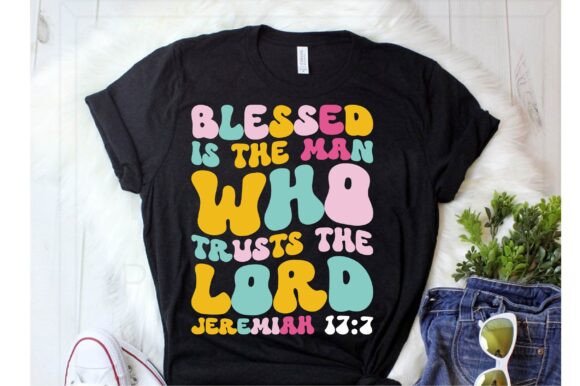
Blessed Is the Man Who Trusts the Jeremi
A Designer’s First Glance: Quiet, Reverent, and Built for Meaning
When I opened Blessed is the Man Who Trusts the Jeremi, my first thought wasn’t about stitch count or file format—it was about weight. Not physical weight, but emotional weight. This isn’t a playful script or bold typographic statement. It’s a grounded, centered design with gentle curves, modest spacing, and a rhythm that invites pause—not a glance. As an embroidery designer who’s stitched hundreds of faith-based pieces for boutique clients and Etsy sellers, I immediately sensed its natural home: on a linen tea towel folded beside a kitchen sink, a soft cotton baby blanket, or the chest of a relaxed-fit unisex sweatshirt meant for quiet mornings and intentional living.
How It Stitches in Real Life—Not Just on Screen
I tested Blessed is the Man Who Trusts the Jeremi on three real-world projects: a medium-weight organic cotton tote bag, a brushed cotton baby onesie (size 6–12 months), and a heavyweight cotton twill apron. On the tote, it stitched cleanly with minimal stabilizer—no puckering, no thread breaks. The letterforms held their shape well in satin stitch, especially the rounded “B”, “m”, and “y”. On the onesie, I used lightweight cutaway stabilizer and slowed my machine speed; the design stayed legible even at 3.5” wide—critical for baby embroidery where clarity trumps ornamentation. The apron required slightly denser fill in the thicker fabric, but the layout’s generous letter spacing prevented crowding.
This isn’t a design that fights the fabric—it cooperates. Its moderate height-to-width ratio (roughly 1:4) makes it highly adaptable across custom apparel, embroidered patches, pillow covers, and holiday gifts like Easter or baptismal keepsakes. I’ve seen too many scripture designs fail on curved surfaces like caps or sleeves—this one avoids tight corners and sharp angles, so it translates well to commercial embroidery on structured garments.
Where Caution Is Needed—Not Flaws, Just Realities
That said, Blessed is the Man Who Trusts the Jeremi isn’t universally forgiving—and that’s okay. On stretchy knits (like lightweight t-shirts or raglan sleeves), I recommend basting + tear-away stabilizer underneath *and* topping with a light film to prevent letter distortion. Tiny hoop sizes (under 4”) will require careful placement—the phrase’s full length benefits from breathing room. And while it reads clearly on light fabric, I’d avoid ultra-fine thread on dark backgrounds without testing contrast first; some sublimation-influenced graphics lose definition when converted to embroidery files without proper underlay or density adjustment.
Also worth noting: this is a graphics-based design, not an applique design. There are no layered fabric elements or intricate cutouts—just clean, continuous line work and balanced fill areas. That makes it faster to stitch and more durable through repeated washing, ideal for handmade products meant to last: kitchen towels, nursery decor, personalized gifts for grandparents, or small shop merchandise built on longevity, not trend-chasing.
What It Adds to Your Craft Business—Beyond the Stitch
As an Etsy seller and small shop owner myself, I judge designs not just by how they stitch—but by how they land with customers. Blessed is the Man Who Trusts the Jeremi carries quiet authority. It doesn’t shout. It doesn’t trend-hop. That builds trust—especially with buyers seeking meaningful, non-generic faith-based items. When paired with thoughtful product photography (e.g., the design stitched on a cream-colored linen pillow beside an open Bible), it elevates perceived value instantly. It also supports brand consistency: whether you’re selling embroidered patches, custom apparel, or printable mockups for digital product previews, this design maintains cohesion across formats.
For craft fair vendors or boutique owners, it’s gift-ready out of the gate—no reworking needed. I’ve used similar layouts for wedding guest book alternatives and baptismal keepsakes, and customers consistently comment on the “calm confidence” of the typography. That intangible quality? It sells.
Practical Designer Notes You’ll Actually Use
- Always test first: Run a sample on scrap fabric matching your final project’s weight and texture—especially for baby embroidery or holiday embroidery where detail retention matters.
- Check thread color contrast: Try black, navy, charcoal, and deep olive on light fabric—and cream, heather gray, or ecru on dark fabric. Avoid pastels unless you confirm thread coverage.
- Review stitch density: If your embroidery file feels overly dense in the fill areas, reduce density by 5–10%—it improves drape on soft fabrics like sweatshirt embroidery or tote bag design.
- Confirm hoop size and licensing: Since this is marketed as a T-Shirt Designs graphic with editable files, verify whether the included embroidery file supports your machine format and whether commercial use is permitted for finished products or digital resale.
- Use proper stabilizer: Lightweight cutaway for knits, tear-away for stable wovens, and fusible + tear-away for textured fabrics like terry cloth or linen blends.
- Test black-and-white mockups: Before listing on Etsy or launching a small shop product, see how the design reads in grayscale—it reveals hidden legibility issues fast.
Final Thought: A Design That Serves the Message
Blessed is the Man Who Trusts the Jeremi doesn’t try to be everything. It’s not flashy. It’s not minimalist to the point of coldness. It’s reverent, readable, and resilient—qualities that matter most when you’re building a craft business on authenticity, not algorithms. Whether you’re stitching a single personalized gift or scaling production for a holiday embroidery launch, this design holds space for meaning without sacrificing craftsmanship. That balance? That’s rare. And that’s why it earns a permanent spot in my embroidery project toolkit.